



Lazareth
August 25th, 2026
MOVIE: LAZARETH
STARRING: ASHLEY JUDD, SARAH PIDGEON, KATIE DOUGLAS, ASHER ANGEL
DIRECTED BY: ALEC TIBALDI
AMovieGuy.com’s RATING: 2 ½ STARS (Out of 4)
RATED: PG-13
RUN TIME: 86 MINUTES
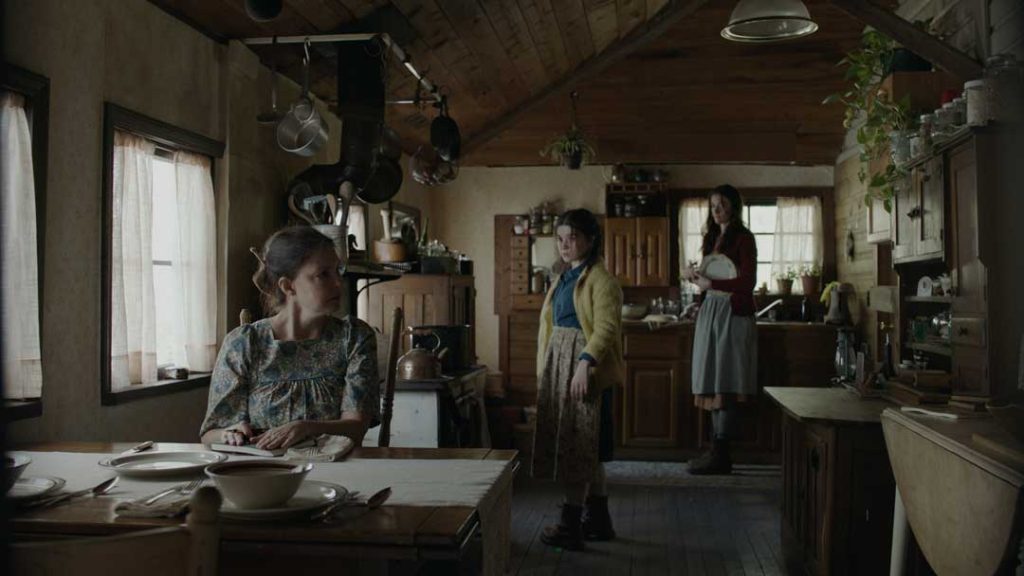
2026 could easily be labeled the year when movies became obsessed with the end of the world. 28 Years Later: The Bone Temple offered a bleak prediction of death all around us, while Project Hail Mary had us putting our faith in science to save the day. Lazareth sits somewhere in the middle, focusing less on the apocalypse itself and more on the aftermath. It follows three women surviving in a cabin, creating their own sanctuary as the world around them collapses. There’s a little more going on than just the end of the world, though, as writer/director Alec Tibaldi digs into themes of religion, family, and sex. Unfortunately, the film loses focus along the way. Lazareth is a solid movie that could have been elevated into something much more.
The story follows three women: Lee (Ashley Judd), the matriarch of the home, and her nieces, Maeve (Sarah Pidgeon) and Imogen (Katie Douglas). They have named their cabin Lazareth, often praying to it—not in a religious sense, but as a way of giving thanks to the shelter that has kept them safe during these dark times. We see how the three work together, with Lee being the only one allowed to go into town, leaving the two younger women curious about what exists beyond their isolated home. When a wounded man named Owen (Asher Angel) is found bleeding and unconscious outside their cabin, Maeve and Imogen bring him inside against Lee’s wishes. His arrival creates a disturbance in their quiet little sanctuary, threatening to upend the life they have carefully built.
The premise, written by Tibaldi, is not something we haven’t seen many times before. I was reminded of films such as Z for Zachariah and It Comes at Night, both of which explored similar ideas with greater success. What does work here, however, is the dynamic between the three leading women. There is a genuine camaraderie between them, along with a lingering hint of jealousy and the growing frustration of feeling restricted. The family strife is one of the film’s most memorable elements. The problem is that Lazareth tries to juggle too many ideas at once. On one hand, it is a survival story. On the other hand, it’s a coming-of-age drama. Then there is Owen’s arrival, which introduces an entirely new source of conflict and asks whether these three women can survive the disruption he brings into their lives.
What works across the board is the cast. Judd, who never phones it in, is the best part of the film whenever she is given the opportunity to take control of a scene. Pidgeon and Douglas, meanwhile, feel like real-life sisters, sharing a natural chemistry that elevates their performances. Tibaldi’s direction can feel rocky at times, particularly when the film struggles to focus on one central story instead of branching into several subplots. Still, he manages to deliver a few genuine thrills as the story moves toward its conclusion.
On one hand, Lazareth feels like a generic version of The Bone Temple, dealing with quarantine and the lengths people will go to protect themselves from those desperately trying to intrude on their sanctuary. But the film is also unafraid to push its characters into dangerous situations, making the narrative less predictable as it moves toward the end.
It’s not a full endorsement, but as a Netflix film, there are certainly worse ways to spend a couple of hours during these desperate times.
2 ½ STARS
LAZARETH IS CURRENTLY PLAYING ON NETFLIX.
Written by: Leo Brady